
تحليل Conjoint في Sentink: اتخاذ قرارات أذكى للمنتجات والتسعير باستخدام الذكاء الاصطناعي
العملاء لا يتخذون قراراتهم بناءً على عامل واحد فقط.
بل يقارنون بين:
- السعر
- الميزات
- العلامة التجارية
- سرعة التوصيل
- الضمان
- التجربة الكاملة
الاستبيانات التقليدية تسأل المستخدم مباشرة:
"ما هو العامل الأهم بالنسبة لك؟"
لكن الواقع أكثر تعقيداً من ذلك.
هنا يأتي دور تحليل Conjoint كواحد من أقوى أساليب أبحاث السوق الحديثة.
ما هو تحليل Conjoint؟
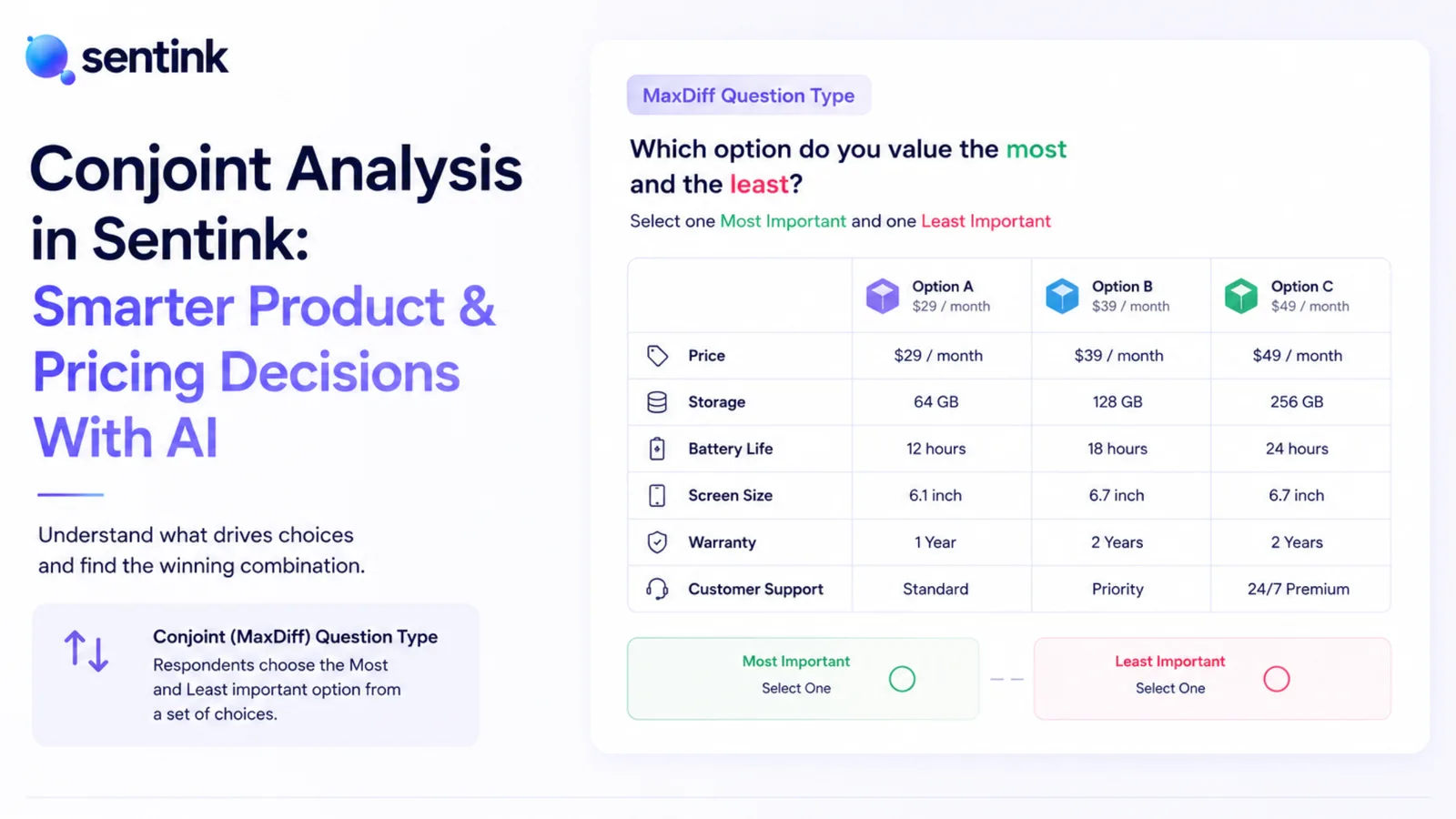
تحليل Conjoint هو أسلوب بحثي يساعد على فهم كيفية تقييم الأشخاص لتركيبات مختلفة من المنتجات أو الخدمات.
بدلاً من تقييم كل ميزة بشكل منفصل، يتم عرض مجموعات واقعية من الخيارات ويُطلب من المستخدم اختيار الخيار المفضل لديه.
هذا يساعد الشركات على فهم:
- ما الذي يؤثر فعلاً على قرار العميل
- أي الميزات تزيد من التفضيل
- مدى حساسية العملاء للسعر
- أي تركيبة منتج تحقق أفضل استجابة
تحليل Conjoint داخل Sentink
تدعم منصة Sentink أسلوب Choice-Based Conjoint (CBC) بشكل متكامل داخل المنصة.
يتم عرض مجموعة من مهام الاختيار على المستجيب.
كل مهمة تحتوي على:
- عدة خيارات
- سمات متعددة
- مستويات مختلفة لكل سمة
مثال:
| السمة | المستويات |
|---|---|
| السعر | 9$ / 19$ / 29$ |
| التوصيل | نفس اليوم / يومين / خمسة أيام |
| العلامة التجارية | Brand A / Brand B |
| الضمان | سنة / ثلاث سنوات |
يمكن للمستخدم اختيار:
- الخيار المفضل
- أو "لا شيء من هذه الخيارات"
هذا ينتج سلوك تفضيل أقرب للواقع مقارنة بالأسئلة التقليدية.
كيف يقوم Sentink بتحليل البيانات؟
يقوم Sentink بإعادة بناء:
- مناسبات الاختيار
- تصميم التجربة
- مجموعات الإجابات الموزونة
ثم يطبق:
- نماذج تحليل لوجستية متعددة الحدود
- Ridge Regularization
- محاكاة حصص التفضيل
والنتيجة هي تجربة تحليل عملية ومتكاملة داخل منصة الاستبيانات نفسها.
حالات الاستخدام العملية
تحسين التسعير
يساعد Conjoint على معرفة:
- مستويات السعر المفضلة
- هل الميزات الإضافية تستحق رفع السعر؟
- كيف يؤثر السعر على التفضيل؟
مثال
شركة SaaS تختبر:
- 49$
- 99$
- 149$
مع:
- ميزات الذكاء الاصطناعي
- التقارير
- الأتمتة
لفهم أفضل عرض ممكن للسوق.
تحديد أولويات الميزات
ليست كل الميزات بنفس الأهمية.
يساعد التحليل على معرفة:
- الميزات الأكثر تأثيراً
- الميزات التي يتجاهلها العملاء
- أين يجب الاستثمار
تصميم المنتجات والباقات
يمكن اختبار:
- الأحجام
- الألوان
- الباقات
- النسخ المختلفة
- بلد المنشأ
- قنوات البيع
قبل إطلاق المنتج فعلياً.
اختبار المنافسة والسيناريوهات
يتيح المحاكي داخل Sentink مقارنة:
- منتجاتك
- منتجات المنافسين
- عروض مستقبلية افتراضية
في بيئة "ماذا لو" تفاعلية.
تحليل الشرائح المختلفة
كل شريحة جمهور تهتم بأشياء مختلفة.
يمكن تقسيم النتائج حسب:
- العمر
- الجنس
- الدولة
- نوع الاشتراك
- السلوك الشرائي
- أسئلة الاستبيان
لفهم:
- الفئات الحساسة للسعر
- الفئات المهتمة بالعلامة التجارية
- الفئات التي تركز على الراحة والخدمة
أنواع التحليلات داخل Sentink
تحليل الأهمية النسبية
يوضح مدى تأثير كل سمة على القرار النهائي.
مثال:
| السمة | الأهمية |
|---|---|
| السعر | 42% |
| العلامة التجارية | 25% |
| سرعة التوصيل | 18% |
| الضمان | 15% |
ويجيب على سؤال:
"ما الذي يؤثر فعلاً على القرار؟"
محفزات التفضيل (Utilities)
يقوم Sentink بحساب تأثير كل مستوى من مستويات السمات.
مما يساعد على معرفة:
- ما الذي يزيد التفضيل
- ما الذي يقلله
- أي التركيبات أكثر جاذبية
محاكاة حصص التفضيل
يقدّر Sentink الحصة التفضيلية الافتراضية بين الخيارات المختلفة.
أي:
"لو تنافست هذه المنتجات معاً، أيها سيفوز؟"
المحاكي التفاعلي
يمكن للمستخدم:
- تعديل الأسعار
- تغيير الميزات
- إضافة منافسين
- حذف خيارات
- تفعيل "لا شيء من هذه"
- مقارنة عدة منتجات
ويتم إعادة حساب الحصص مباشرة.
تحليل الشرائح
مقارنة سلوك الشرائح المختلفة.
مثال:
- الشباب يهتمون بالسرعة
- الفئات الأكبر تهتم بالثقة والضمان
ويعرض Sentink:
- اختلافات الأهمية
- اختلافات التفضيل
- أنماط السلوك بين الشرائح
تحليل السعر
عند وجود سمة السعر، يمكن لـ Sentink تقدير:
- مناطق التسعير المناسبة
- العلاقة بين السعر والحصة
- مؤشرات الفرص الإيرادية
وهي نتائج توجيهية تساعد في اتخاذ القرار.
منحنيات الطلب
يمكن إنشاء منحنيات توضح:
- العلاقة بين السعر والتفضيل
- حساسية السعر
- مناطق الانخفاض الحاد في الطلب
الرؤى المدعومة بالذكاء الاصطناعي
يمكن لـ Sentink إنشاء:
- ملخصات تنفيذية
- توصيات
- فرص
- مخاطر
- اقتراحات تسعير وتموضع
اعتماداً على التحليل الفعلي للبيانات.
لماذا يعتبر Conjoint مهماً؟
يساعد تحليل Conjoint الشركات على تقليل التخمين عند اتخاذ قرارات تتعلق بـ:
- تطوير المنتجات
- التسعير
- التغليف
- الباقات
- الاشتراكات
- ترتيب أولويات الميزات
- التموضع في السوق
بدلاً من الاعتماد على الآراء فقط، يمكن للشركات محاكاة قرارات العملاء بشكل أقرب للواقع.
تحليل Conjoint مع Sentink
تجمع منصة Sentink بين:
- إنشاء الاستبيانات
- التحليلات المتقدمة
- التقارير الذكية
- المحاكاة التفاعلية
- تحليل الشرائح
- الرؤى التنفيذية
داخل منصة واحدة متكاملة.
مما يساعد فرق:
- أبحاث السوق
- تجربة العملاء
- المنتجات
- الاستراتيجية
على الانتقال من مجرد جمع الآراء إلى اختبار قرارات أعمال حقيقية باستخدام الذكاء الاصطناعي.
باقات سحابية واضحة أو نشر خاص حسب احتياج فريقك.
ابدأ مجاناًيقرأ الناس أيضًا
من نفس التصنيف والوسوم المشتركة.
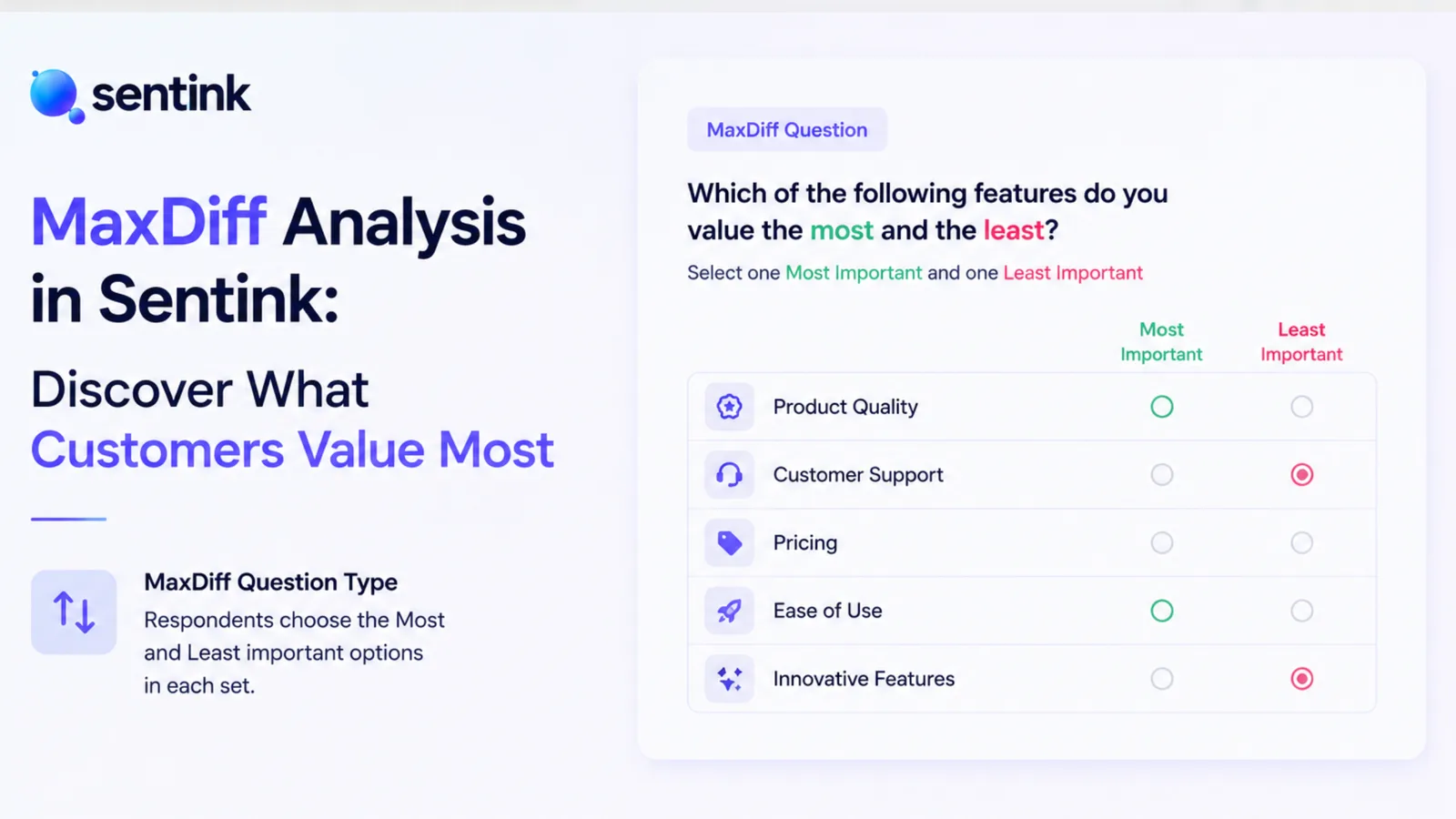
تعرّف على كيفية استخدام Sentink لتحليل MaxDiff لمعرفة أهم الميزات والرسائل والأولويات باستخدام أسلوب الأفضل والأسوأ والتحليلات المدعومة بالذكاء الاصطناعي.

اكتشف كيف تساعد منصة Sentink شركات العقارات وإدارة الأملاك على جمع ملاحظات المستأجرين، وتحليل المشاعر، وأتمتة التقارير، وتحسين تجربة العقارات باستخدام الذكاء الاصطناعي.

اكتشف كيف تساعد منصة Sentink المؤسسات غير الربحية على قياس الأثر، وجمع ملاحظات المجتمع، وتحليل المشاعر، وأتمتة التقارير باستخدام تحليلات مدعومة بالذكاء الاصطناعي.

اكتشف كيف تساعد منصة Sentink المتاجر والفنادق والمطاعم وقطاع الضيافة على تحسين رضا العملاء، وتحليل المشاعر، وأتمتة التقارير باستخدام تحليلات مدعومة بالذكاء الاصطناعي.

اكتشف كيف تساعد منصة Sentink المدارس والجامعات والمؤسسات التعليمية على جمع ملاحظات الطلاب، وتحليل المشاعر، وأتمتة التقارير، وتحسين التجربة التعليمية باستخدام الذكاء الاصطناعي.

اكتشف كيف تساعد منصة Sentink المؤسسات الصحية على جمع ملاحظات المرضى، وتحليل المشاعر، وأتمتة التقارير، وتحسين تجربة المرضى باستخدام تحليلات مدعومة بالذكاء الاصطناعي.