
How To Analyze Survey Data Using AI in 2026
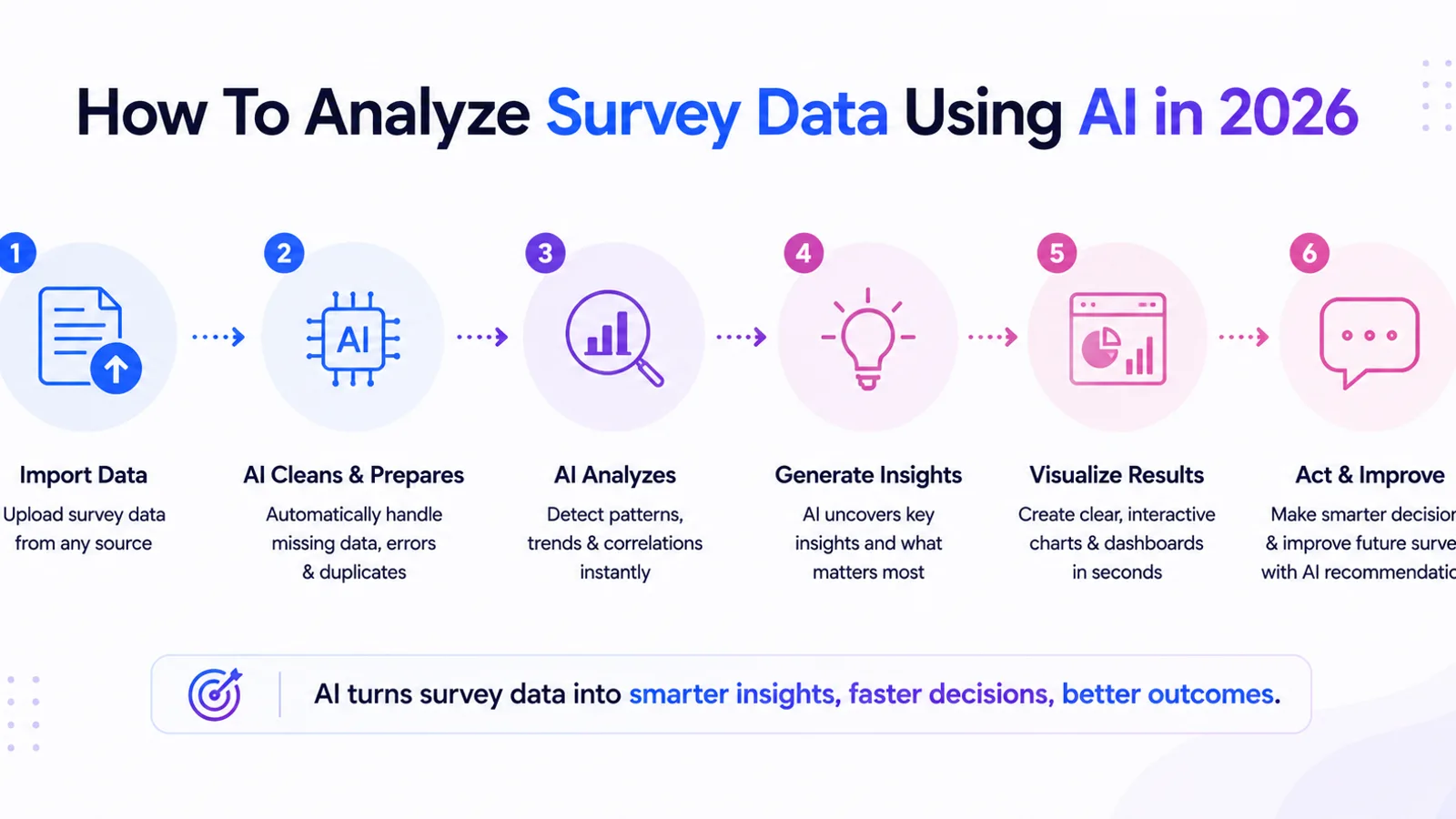
How To Analyze Survey Data Using AI in 2026
Modern organizations collect massive amounts of survey data every day.
This data comes from:
- customer surveys
- employee feedback
- NPS programs
- product research
- market research
- satisfaction surveys
- support interactions
But collecting responses is only the beginning.
The real challenge is:
understanding what the data actually means
Traditionally, survey analysis required:
- spreadsheets
- manual filtering
- chart creation
- statistical analysis
- written reports
- human interpretation
This process can be:
- slow
- expensive
- difficult to scale
- heavily dependent on analysts
Today, artificial intelligence is transforming how organizations analyze survey data.
Platforms like Sentink are helping organizations automate analytics, generate insights, analyze sentiment, and create intelligent reports much faster than traditional workflows.
In this article, we explain:
- how AI analyzes survey data
- the biggest benefits of AI-powered analytics
- how sentiment analysis works
- how AI generates reports
- how conversational analytics changes research
- the future of AI-powered survey intelligence
Why Traditional Survey Analysis Is Difficult
Traditional survey analysis often involves multiple manual steps:
- Exporting Excel files
- Cleaning responses manually
- Filtering demographic segments
- Building charts manually
- Writing summaries manually
- Interpreting results manually
This becomes increasingly difficult when organizations collect:
- thousands of responses
- multilingual feedback
- open-ended comments
- complex datasets
Manual analysis can slow decision-making dramatically.
Modern organizations increasingly need:
- real-time insights
- automated summaries
- faster reporting
- AI-assisted interpretation
- intelligent dashboards
This is where AI-powered analytics becomes extremely valuable.
What Does AI Do in Survey Analytics?
Artificial intelligence helps organizations transform:
raw survey responses → actionable intelligence
Modern AI systems can automatically:
- summarize feedback
- identify trends
- analyze sentiment
- detect anomalies
- group themes
- generate reports
- explain insights
- highlight risks and opportunities
Instead of relying entirely on analysts, organizations can increasingly automate large parts of the research workflow.
AI-Powered Sentiment Analysis
One of the most important AI capabilities is:
Sentiment Analysis
Sentiment analysis helps organizations understand whether feedback is:
- positive
- negative
- neutral
- frustrated
- satisfied
- emotional
For example:
“The support team was excellent.” → Positive sentiment
“The onboarding process was confusing.” → Negative sentiment
AI systems can analyze thousands of comments automatically.
Platforms like Sentink increasingly integrate sentiment analysis directly into dashboards and reporting workflows.
Detecting Trends Automatically
AI systems are extremely effective at identifying patterns and trends.
For example, AI can automatically detect:
- declining customer satisfaction
- recurring complaints
- product quality issues
- regional differences
- employee morale trends
- emerging operational problems
Instead of manually searching through spreadsheets, organizations can identify insights almost instantly.
AI and Open-Ended Responses
Open-ended questions generate some of the most valuable survey insights.
Examples include:
- “What did you dislike?”
- “How can we improve?”
- “Describe your experience.”
But analyzing open-ended responses manually is extremely time-consuming.
AI systems help organizations:
- summarize responses automatically
- group similar feedback
- identify common themes
- detect emotional patterns
- generate executive summaries
This dramatically reduces manual analysis work.
AI and Cross-Tabulation
Cross-tabulation is one of the most important techniques in survey research.
It helps organizations compare responses across:
- age groups
- regions
- departments
- customer segments
- demographics
Traditionally, cross-tabs required:
- statistical expertise
- manual filtering
- complex reporting
Modern AI systems increasingly simplify this process by:
- explaining cross-tab results
- identifying key patterns
- generating summaries automatically
- highlighting important differences
Platforms like Sentink combine cross-tabulation with AI interpretation and visual analytics to simplify advanced research workflows.
Conversational Analytics and “Chat With Data”
One of the biggest innovations in AI analytics is:
Conversational Analytics
Instead of manually navigating dashboards, users can interact with data using natural language.
For example:
- “What were the top customer complaints?”
- “Summarize employee feedback.”
- “Which regions had the lowest satisfaction?”
- “What themes appeared most often?”
AI systems can answer these questions conversationally.
Platforms like Sentink increasingly support these “Chat with Data” experiences.
Automated Reporting With AI
Traditional reporting often takes:
- hours
- days
- or weeks
AI-powered platforms can dramatically reduce reporting time by:
- generating summaries automatically
- creating executive reports
- building dashboards instantly
- identifying trends in real time
This helps organizations move from:
survey collection → decision-making
much faster.
AI and Multilingual Survey Analytics
Modern organizations increasingly operate globally.
This creates challenges involving:
- multilingual feedback
- Arabic analytics
- mixed-language datasets
- translation consistency
- sentiment analysis across languages
Platforms like Sentink increasingly focus on multilingual and Arabic-first analytics workflows.
This is especially important for:
- Gulf organizations
- multinational enterprises
- government programs
- regional research agencies
Benefits of Using AI for Survey Analysis
Organizations using AI-powered analytics can often:
- reduce reporting time
- improve decision-making speed
- detect issues earlier
- automate manual analysis
- improve customer understanding
- analyze larger datasets
- scale research operations faster
AI helps organizations focus less on manual reporting and more on strategic decision-making.
The Future of AI Survey Analytics
The future of survey analytics is rapidly moving toward:
- AI-generated insights
- conversational analytics
- intelligent dashboards
- predictive analytics
- automated reporting
- sentiment intelligence
- decision-support systems
Traditional spreadsheets and static reports are no longer enough.
Organizations increasingly need platforms that help them:
understand feedback — not just collect it
This is why AI-powered survey intelligence platforms are becoming increasingly important.
Final Thoughts
Artificial intelligence is fundamentally changing how organizations analyze survey data.
Instead of relying entirely on manual analysis, organizations increasingly want:
- automated insights
- sentiment analysis
- conversational reporting
- intelligent dashboards
- AI-generated summaries
- faster decision-making
Platforms like Sentink are helping shape this next generation of intelligent survey analytics.
As AI continues evolving, intelligent survey analysis may become one of the most important technologies in customer experience and research.
Transparent Cloud plans and private deployment—pick what fits your team.
See pricingPeople also read
Picked from the same category and shared topics.
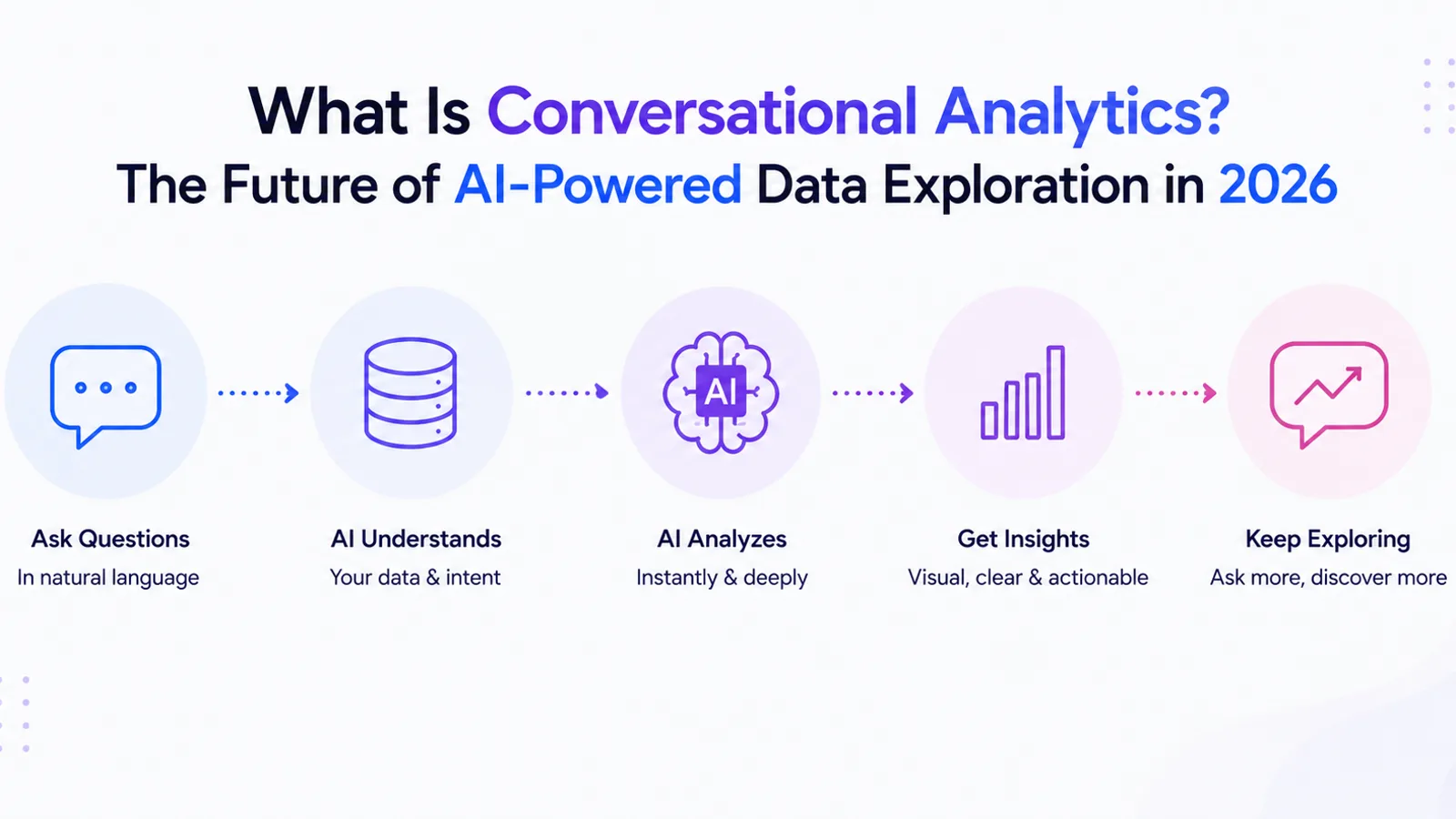
Learn what conversational analytics is, how AI-powered “Chat with Data” systems work, and why platforms like Sentink are transforming survey analytics, reporting, and business intelligence.
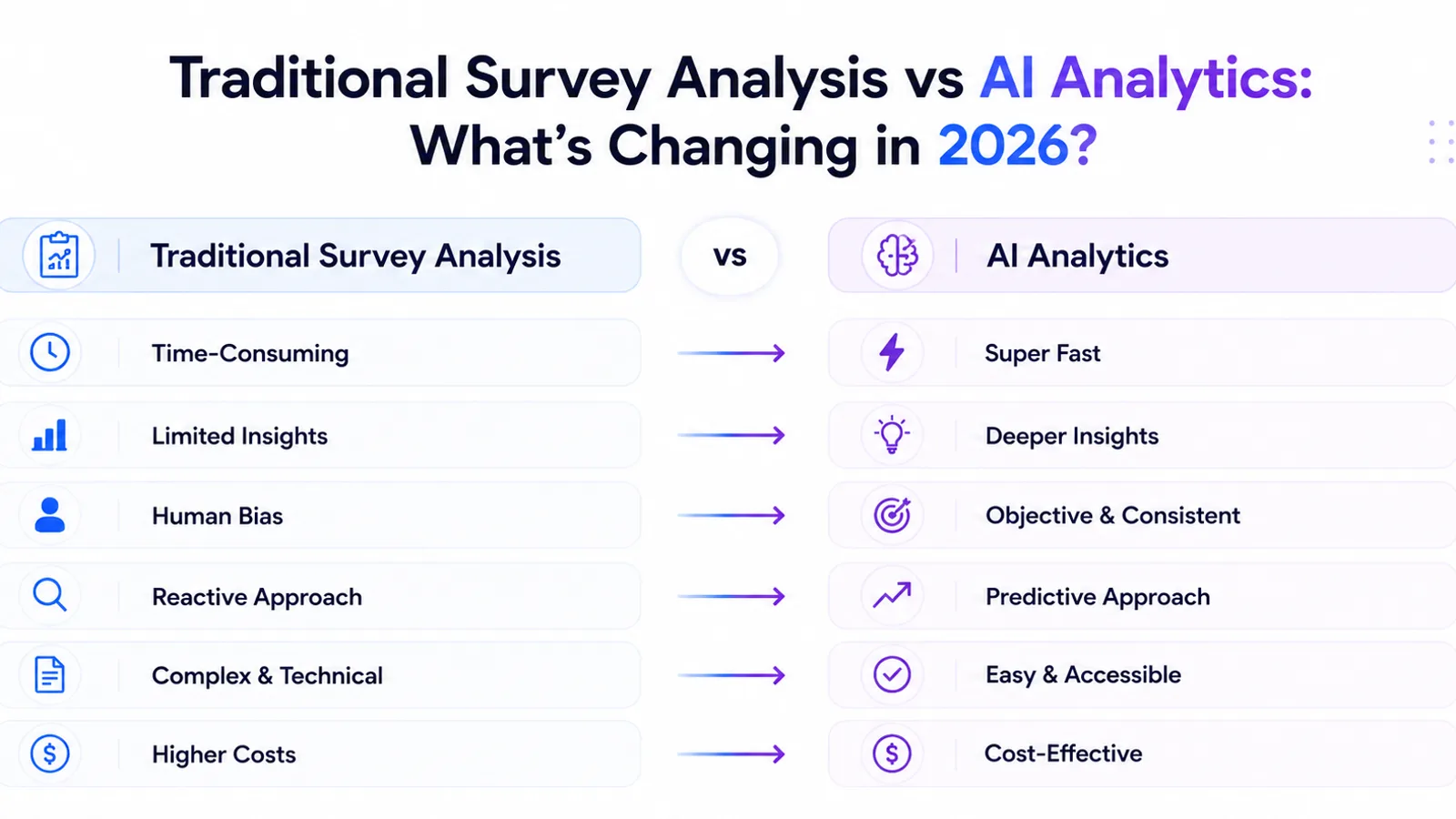
Discover the differences between traditional survey analysis and AI-powered analytics, including automated reporting, sentiment analysis, conversational dashboards, and intelligent survey platforms like Sentink.
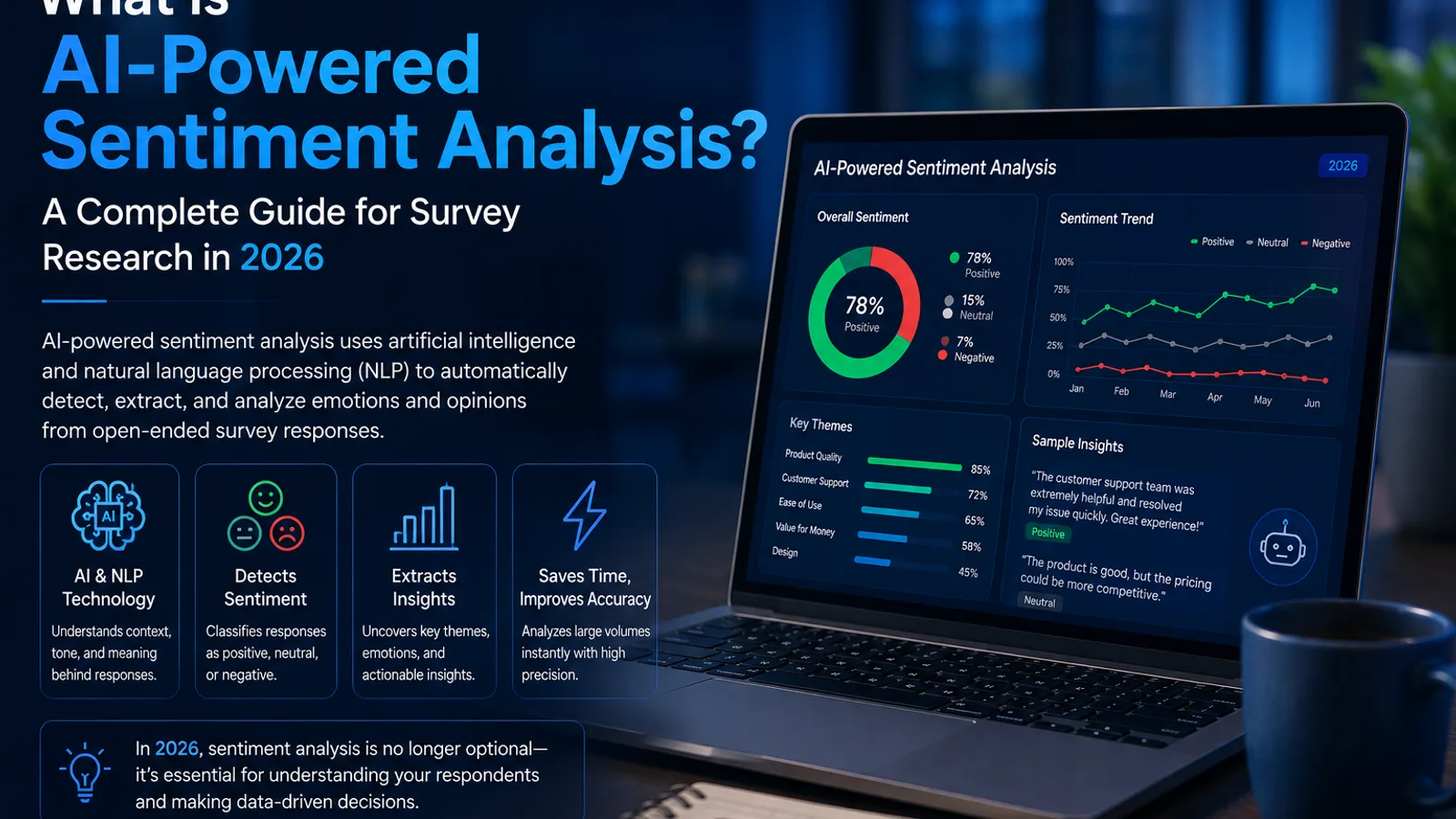
Learn how AI-powered sentiment analysis works, how organizations analyze customer and employee feedback automatically, and why platforms like Sentink are transforming survey analytics in 2026.
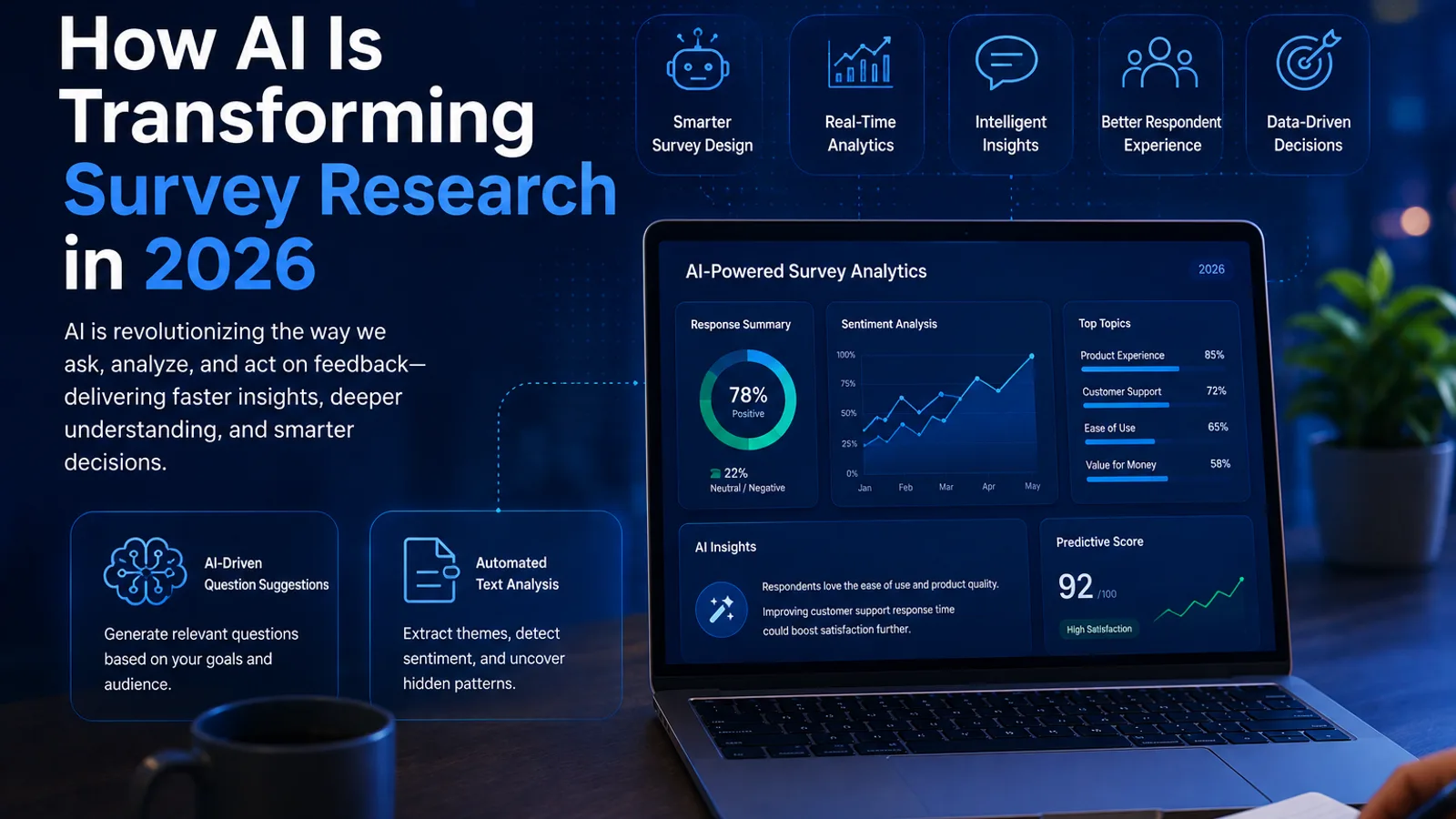
Discover how artificial intelligence is transforming survey research through automated insights, sentiment analysis, conversational analytics, reporting automation, and intelligent survey platforms like Sentink.
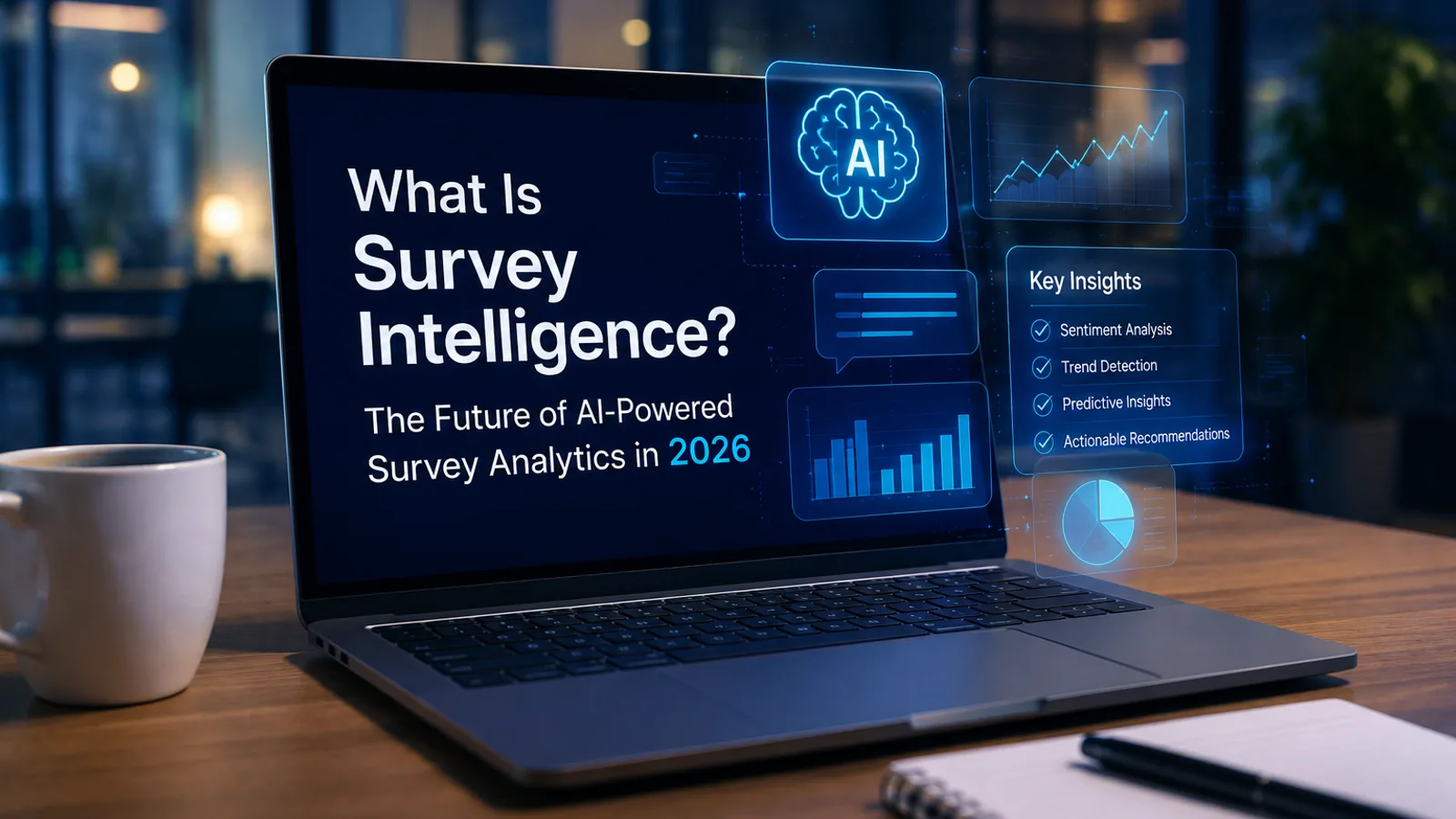
Learn what survey intelligence means, how AI is transforming survey analytics, sentiment analysis, reporting, dashboards, and customer insights, and why platforms like Sentink are shaping the future of research.